The Evidence Brief
Every other Wednesday morning
Industry news, filtered down to the stories that show how health brands use science to win.
What is in each issue
-
The Stories
Deals, launches, funding and rulings, and the part evidence played in each.
-
The Science Desk
Notes from one of our research scientists, who design and run clinical trials for health brands.
-
Guest Slots
Occasional pieces from investors, consultants and people inside health brands.
Recent editions
Every story from the Brief, newest first.
 Becky BrownHead of R&D, FitForMe
Why Research Is Our Strategy, Not Our Side Project
FitForMe's Head of R&D on why 21 peer-reviewed papers and the attention of 8,000 clinicians make research the centre of the company's strategy.
Finding the signal: why measurement matters
 Dr Tom JamesonChief Scientific Officer, StudySetGo
How the noise in a trial's measurements decides how many participants it needs, and why cutting corners on measurement costs more later.

How Thorne is using consumer studies to build its evidence base
Thorne's open-label study of its Creatine + Alpha-GPC powder is one of three different ways health brands are building evidence for the products they sell.
How a supplement brand's calming claim fell apart under regulatory review
Alice Mushrooms had to narrow its Zen-X claim to the one ingredient that had been tested at the same dose as the product.
Bioavailability vs micronutrient status studies, which is better?
 Dr Chris KoscienResearch Scientist, StudySetGo
Two studies can look almost identical on paper and answer completely different questions, and the claim you need decides which one to run.
How brands are winning in the GLP-1 support market
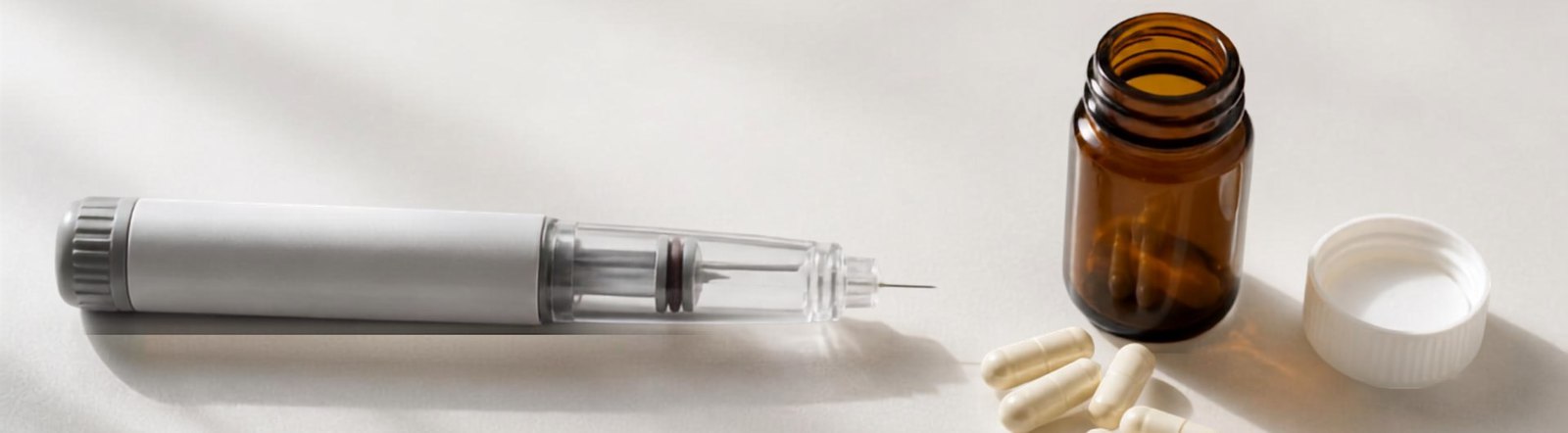
Nestlé, Applied Nutrition and Thorne have each found a different way onto the new GLP-1 support shelf, and the clinical research is only now getting under way.
What's making some supplement brands sell for three times more than others?
Nature's Bounty sold for under one times revenue while Vitabiotics was reported at around £900 million, and the difference comes down to whose research it is.
The Placebo Problem: Why Supplement Research Needs a Comparison Group
 Guoda KaroblyteResearch Scientist, StudySetGo
Placebo response in supplement trials is far bigger than most people assume, which is why a comparison group matters so much.
The brands paying to test their competitors' products
NOW and Cata-Kor paid for lab tests of their competitors' products and published what came back, and a new nonprofit is now doing the same.
Women are buying creatine for brain fog, not for the gym
Three brands launched within a week this August to sell creatine for the brain and bone, in the areas where the research is furthest behind.
Most trials stop measuring too early
Dr Tom JamesonChief Scientific Officer, StudySetGo
Most supplements are sold on subscription, yet most trials never measure what happens when people stop taking the product.
Get The Evidence Brief
Every other Wednesday morning, straight to your inbox.
Free. Nothing else sent, leave from any issue.
Want evidence like this for your brand?
Tell us about your product and what you need the evidence to do.
Get Started